Start with the business problem
Technology earns its place by improving an outcome, not by appearing innovative.
Fairuz Hashim founded SelesAI to make serious AI capability practical, private and accessible to Malaysian businesses.
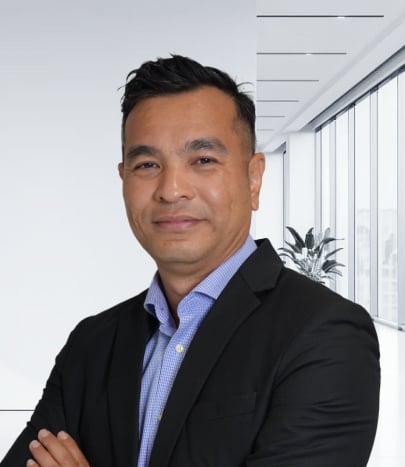 SOLO TECHNOPRENEUR
Fairuz has spent over 20 years turning technology into business capability. His last corporate role was Head of IT & Digital for a division of a Bursa-listed conglomerate.
In that role, he partnered with business heads to drive transformation and adopt digital solutions focused on three practical outcomes: accelerating growth, running more efficient operations and protecting operational continuity.
That experience shaped his view of what technology must deliver when the stakes are real. A promising idea is not enough. Systems must be secure, reliable and governable—and they must improve the business without disrupting the operation they are meant to support.
It also exposed a persistent gap: smaller and growing businesses face many of the same operational pressures as large organisations, but rarely have the budgets, specialist teams or appetite for enterprise complexity.
SelesAI began with a straightforward conviction: focused AI can give Malaysian businesses capabilities that previously demanded large departments, complicated data platforms and open-ended cloud spending.
The goal is not to add another general chatbot. It is to build narrowly defined AI products that perform useful work, operate within clear boundaries and fit the systems customers already have.
“The technology should carry the complexity—not the customer.”
SelesAI is itself a working example of the operating model it offers.
He defines product direction, customer commitments, operating standards and the decisions for which a human must remain accountable.
See how the team operates →Product design, development, quality assurance, finance, legal, security, coordination and customer experience each have a defined owner.
Technology earns its place by improving an outcome, not by appearing innovative.
Privacy, governance and data ownership belong in the architecture from the beginning.
A product must fit the way people work and produce something they can act on.
AI can expand execution capacity. Direction, judgement and material responsibility remain human.
Start with the work your team repeats, the information already in your systems and the outcome you need to improve.